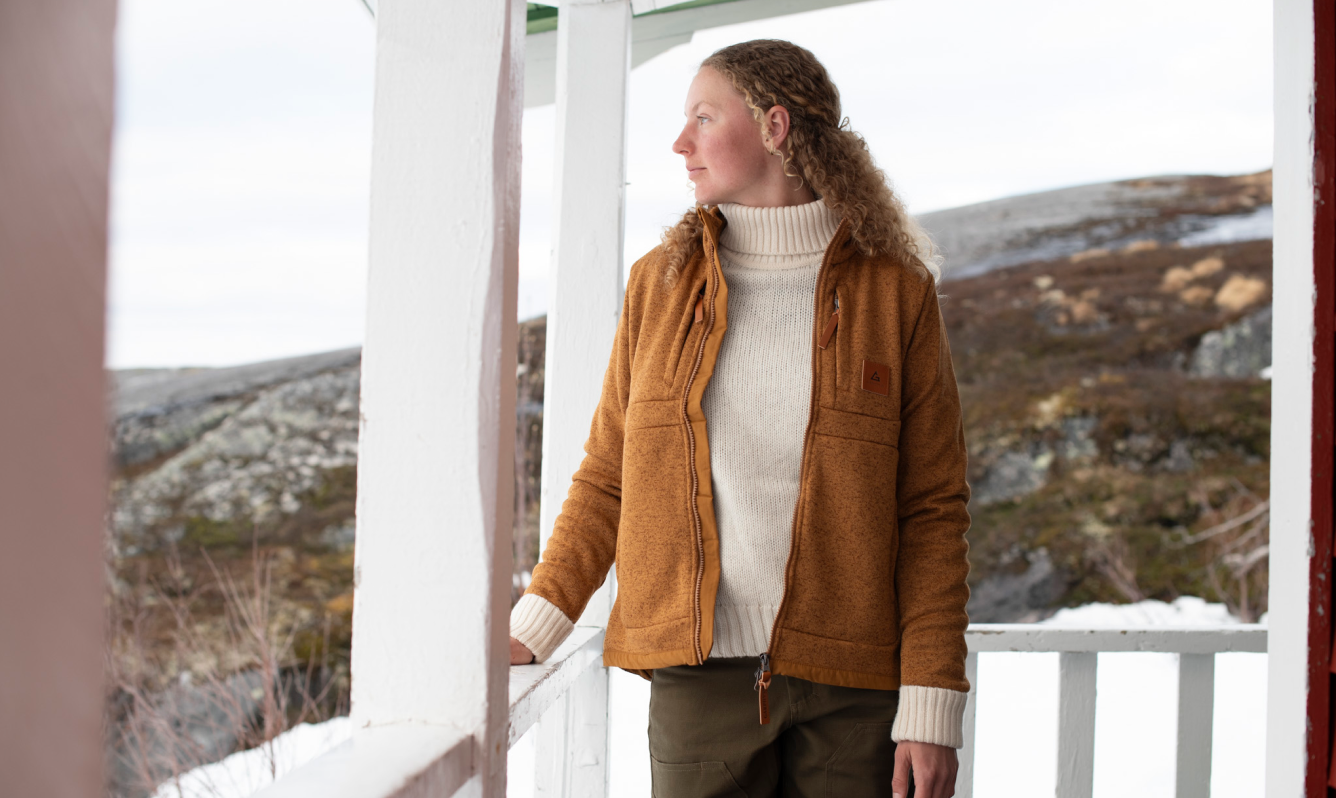
A wool sweater is a versatile layer for everyday life, work and time outdoors. Wool provides natural warmth while remaining breathable, making a wool sweater useful across changing temperatures and different levels of activity.
In this guide, we cover what to look for when choosing a wool sweater, how to use it as part of a layering system and which type is right for different conditions.
Natural warmth
Breathable comfort
Easy to layer
Natural warmth
Breathable comfort
Easy to layer
When choosing a wool sweater, consider how and when you plan to use it. Warmth, fit, neckline and how easily the sweater can be layered all affect which style will work best.
For everyday wear and versatile layering, a classic crew neck is an easy choice. A higher neckline provides more coverage and warmth around the neck, making it particularly useful in colder conditions.
The right wool sweater depends on when and how you plan to use it. Consider the warmth you need, how you want it to fit and whether you’ll wear it on its own or as part of a layering system.
Think about when you’ll wear it
Start with how you expect to use the sweater. For everyday wear and changing conditions, versatility is often most useful. In colder weather or during periods of lower activity, a warmer sweater with more coverage can be a better choice.
Consider warmth and weight
A thicker wool sweater generally provides more insulation, but the warmest option isn’t always the most practical. If you plan to wear it under a jacket, make sure there is enough room to layer comfortably without restricting movement.
Choose the right neckline
The neckline can make a noticeable difference in both warmth and versatility. A classic crew neck is easy to combine with base layers, shirts and jackets, while a turtleneck provides additional warmth and protection around the neck in colder conditions.
Think about what you’ll wear underneath
Consider whether you’ll usually wear the sweater over a T-shirt, shirt or base layer. This will help you choose the right fit and leave enough room underneath for how you plan to use it.
Wool is naturally well suited to changing conditions. Its fibres help retain warmth while allowing moisture to move away from the body, making wool comfortable across different temperatures and activity levels.
Natural temperature regulation
Wool helps insulate when it’s cold while remaining breathable as your activity level changes. This makes a wool sweater useful both on its own in milder weather and as a warm layer when temperatures drop.
Manages moisture
Wool can absorb moisture without immediately feeling wet against the body. Combined with a suitable base layer, this can help you stay more comfortable when moving between activity and rest.
Needs less frequent washing
Wool often doesn’t need to be washed after every use. Airing the sweater between wears can often be enough, which reduces unnecessary washing and helps limit wear over time.
A wool sweater should allow comfortable movement without feeling unnecessarily loose or bulky. For everyday wear, a closer fit can work well, while a little extra room gives you more flexibility in colder conditions.
Pay attention to the shoulders and sleeves. The sweater should sit naturally without pulling and allow you to reach, bend and move your arms comfortably. If you expect to wear something underneath, make sure there is enough room without the sweater losing its shape or feeling oversized.
A wool sweater works well as an insulating mid-layer when temperatures drop. The layers around it can be adjusted depending on the weather, activity level and how much warmth you need.
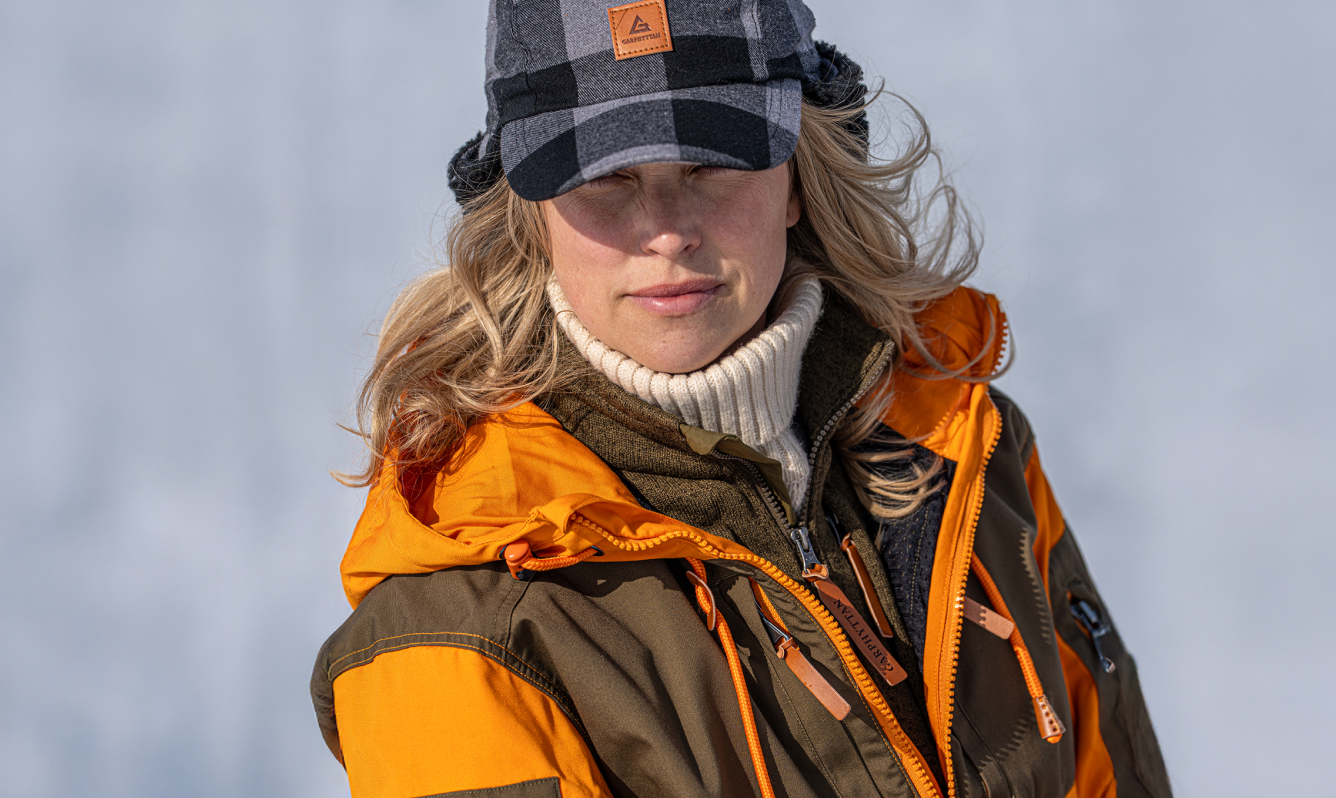
In milder conditions, a wool sweater can also work as an outer layer on its own. When the weather turns colder or more exposed, add a protective jacket over it and adjust the base layer to your activity level.
Read our full guide to the layering system →
Both of our wool sweaters are made from the same warm lambswool blend in a heavy 5-gauge knit. The main difference is the design and neckline, making the choice largely about how you want to wear your sweater.
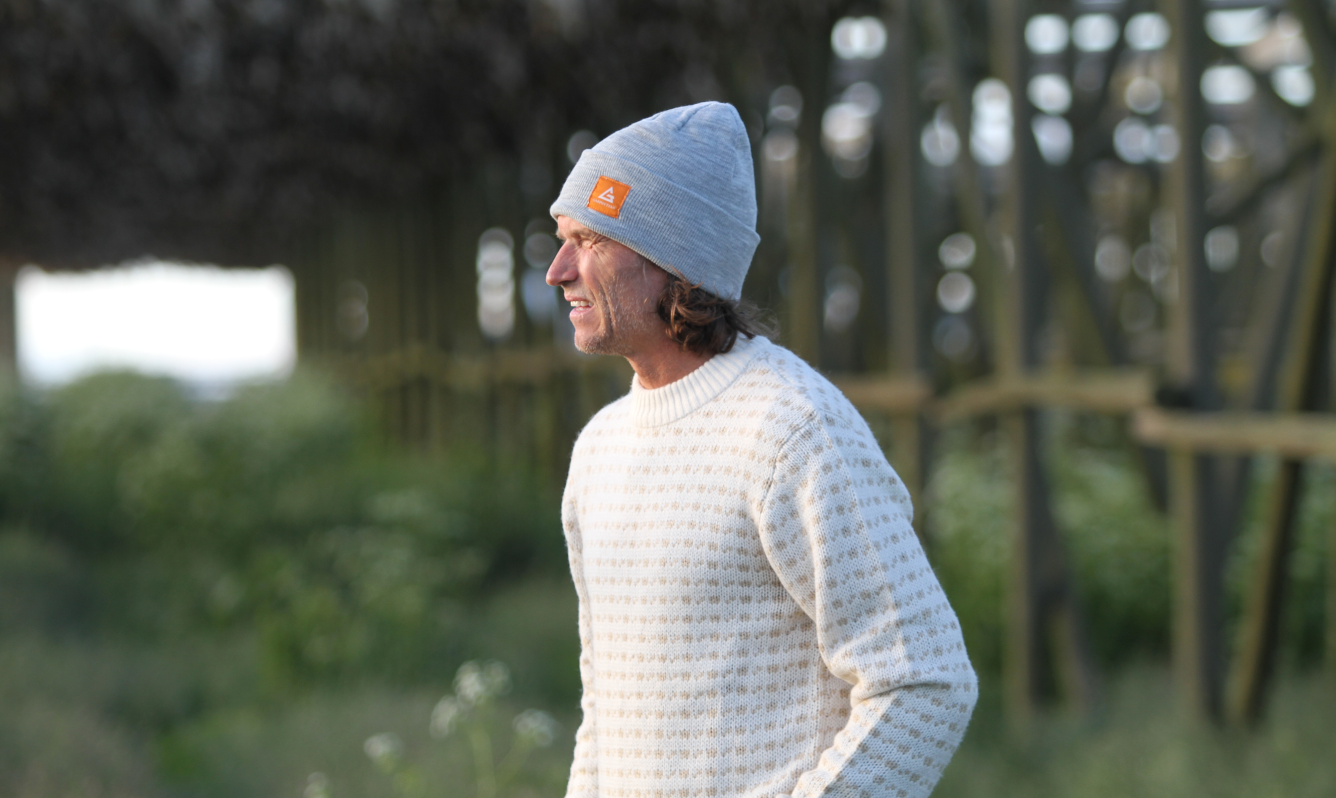
Fisherman Wool Sweater
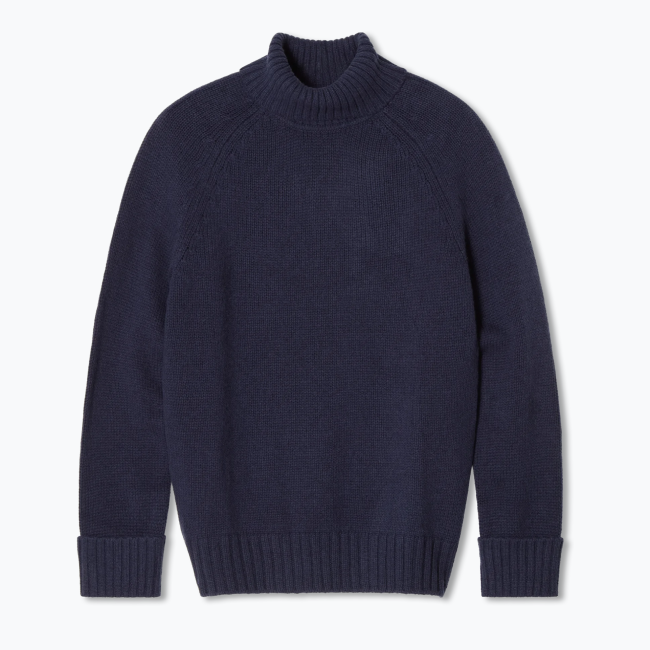
Kodiak Turtleneck
Classic crew neck for versatile layering
High collar for extra coverage
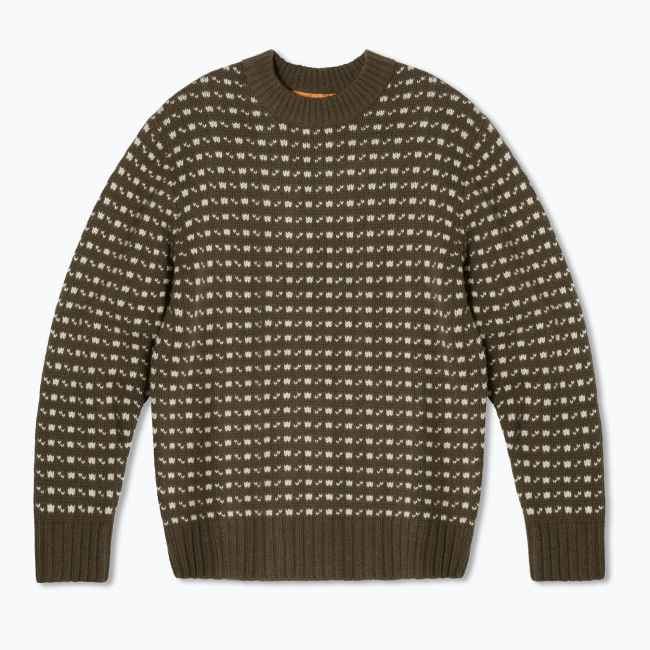
Inspired by traditional fisherman sweaters, Fisherman combines a classic patterned knit with a crew neck that is easy to layer. Wear it over a base layer or shirt, on its own through autumn or under a jacket when temperatures drop.
Kodiak combines the same heavy 5-gauge knit with a high ribbed turtleneck for added warmth and coverage around the neck. Wear it on its own in cool conditions or as a warm layer under a jacket on colder days.
Fisherman Wool Sweater
Kodiak Turtleneck
Classic crew neck for versatile layering
High collar for extra coverage
Classic patterned knit with a versatile crew neck. Easy to wear on its own or layer under a jacket when temperatures drop.
Heavy wool knit with a high ribbed collar for extra warmth and coverage. Wear it on its own or layer it under a jacket on colder days.
Fisherman Wool Sweater
Kodiak Turtleneck
Neckline
Crew neck
High ribbed turtleneck
Design
Fisherman-inspired patterned knit
Clean, understated knit
Best for
Versatile everyday wear & layering
Colder conditions & extra coverage
Wool often needs less frequent washing than other materials. Airing your sweater between wears can often be enough, helping reduce unnecessary washing and wear.
When washing is needed, always follow the care label and use a detergent suitable for wool. Knitted wool garments are often best dried flat and reshaped while damp to help them keep their shape.
Read our clothing care guide →
Yes. Wool provides natural warmth while remaining breathable, making wool sweaters well suited to everyday life outdoors and changing temperatures. They can be worn on their own in milder conditions or as an insulating layer when it gets colder.
Yes. A wool sweater works well as an insulating mid-layer between a base layer and an outer layer. Choose a fit that leaves room underneath while still fitting comfortably under your jacket.
What you wear underneath depends on the weather and activity. A T-shirt or shirt can work well for everyday use, while a moisture-managing base layer is often a better choice for colder conditions or more active time outdoors.
A wool sweater should allow comfortable movement without feeling unnecessarily bulky. If you plan to use it for layering, leave enough room for a base layer or shirt underneath while making sure it still fits comfortably under your outer layer.
Lambswool and merino wool are both natural wool fibres, but they are often used for different types of garments. Merino wool is known for its fine, soft fibres and is commonly used in thinner garments worn close to the skin, such as base layers.
Lambswool has a soft but more substantial feel, making it well suited to heavier knitted sweaters where warmth and structure are important. Our Fisherman Wool Sweater and Kodiak Turtleneck use a lambswool blend in a heavy 5-gauge knit.
Wool generally doesn’t need to be washed after every wear. Airing the sweater between uses is often enough. When washing is necessary, follow the care label, use a detergent suitable for wool and handle the garment carefully while wet.
Read our clothing care guide →
A good wool sweater is a versatile layer for changing conditions. Wear it on its own when the weather allows, or combine it with a base layer and outer layer when temperatures drop.
With the right care, a well-made wool sweater can stay with you for many seasons, becoming a reliable part of your wardrobe for everyday life, work and time outdoors.
We use necessary cookies to make our website work. With your consent, we also use analytics and marketing cookies to understand how the site is used and show relevant advertising. You can accept all, reject optional cookies or manage your preferences.